
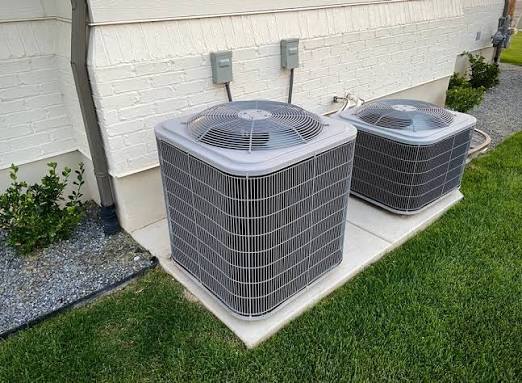
When summer temperatures rise, your air conditioner should be able to keep your home comfortable without running nonstop. Yet even a properly functioning system can struggle when a home has inadequate insulation. If you regularly need cooling service around Chandler, AZ, it may be worth looking beyond the air conditioner itself and considering how well your home is protected from outdoor heat.
Insulation plays an important role in maintaining a stable indoor temperature. When it is missing, damaged, or insufficient, heat can move into your living spaces more easily, forcing your cooling system to work harder and longer.
What Does Insulation Actually Do?
Insulation helps slow the transfer of heat between the inside and outside of your home. During hot weather, its job is to reduce the amount of outdoor heat that enters your living spaces.
Think of your home’s insulation as a barrier. It does not stop heat transfer completely, but it can significantly reduce how quickly heat moves through areas such as the attic, walls, and ceilings.
Without enough insulation, heat can pass through these surfaces more readily. Your air conditioner then has to remove that additional heat to maintain the temperature you selected on the thermostat.
This can lead to longer cooling cycles, increased energy use, and rooms that never seem quite as comfortable as they should.
How Poor Insulation Affects Your Air Conditioner
An air conditioner is designed to remove heat from your home and release it outdoors. When excessive heat continually enters the building, the system has a larger workload.
For example, imagine setting your thermostat to 74 degrees on a hot afternoon. If heat is constantly entering through an inadequately insulated attic or ceiling, your AC must continue removing that heat to maintain the desired indoor temperature.
Instead of reaching the set temperature and cycling off normally, the system may run for extended periods.
Over time, this added workload can contribute to greater wear on components. It may also make your home less energy efficient, particularly during periods of extreme heat when the cooling system is already working hard.
Signs Your Home May Have Insulation Problems
Poor insulation is not always immediately obvious. You may notice its effects through changes in comfort or cooling performance rather than seeing the insulation itself.
Several signs can point to a potential problem:
● Some rooms are consistently hotter than others. Uneven temperatures may indicate insufficient insulation in specific areas, although ductwork and other HVAC issues can also contribute.
● Your AC runs for long periods. Extended operation can have several causes, but excessive heat entering the home is one possibility.
● The upstairs feels significantly warmer. Heat naturally accumulates in upper areas, and inadequate attic insulation can make the difference more noticeable.
● Your energy bills have increased. Higher cooling costs may result from several factors, including insulation problems, system efficiency, thermostat settings, or changing outdoor temperatures.
● The attic becomes extremely hot. A hot attic is normal to some extent during summer, but insufficient insulation can allow more of that heat to affect the living space below.
These signs do not automatically mean insulation is the problem. An HVAC professional or qualified insulation contractor can help determine what is actually causing the discomfort.
Why the Attic Deserves Special Attention
The attic is one of the most important areas to consider when evaluating insulation in a hot climate.
Your roof is exposed directly to sunlight throughout the day. As the roof absorbs solar heat, attic temperatures can rise substantially. If the ceiling between the attic and living space does not have adequate insulation, heat can move downward into your home.
This can make upper rooms especially difficult to cool.
Proper attic insulation can help slow this transfer, allowing your air conditioner to maintain indoor temperatures more effectively. Attic ventilation can also be an important part of managing heat and moisture, depending on the home’s design.
Insulation and Air Leaks Are Different Problems
It is also important to distinguish insulation from air sealing.
Insulation slows heat transfer, while air sealing addresses unwanted movement of air through gaps, cracks, and openings in the building envelope. A home can have insulation but still lose cooling efficiency if there are significant air leaks around windows, doors, electrical penetrations, recessed lights, or other openings.
In some situations, improving insulation without addressing major air leakage may not produce the results homeowners expect.
That is why a broader evaluation of the home’s thermal envelope can be more useful than simply adding insulation without identifying the underlying issues.
Poor Insulation Can Affect Comfort, Too
Energy efficiency is only part of the equation. Poor insulation can also make a home feel uncomfortable.
You might notice that the thermostat says one temperature while certain rooms feel considerably warmer. This can be particularly frustrating when the air conditioner appears to be running normally.
Uneven temperatures can have multiple causes, including inadequate insulation, duct leakage, poor airflow, solar exposure, or an improperly sized HVAC system. Identifying the actual cause is important before investing in a solution.
Adding insulation may help in some homes, while others may need ductwork improvements, air sealing, HVAC maintenance, or a combination of measures.
How Better Insulation Can Support Your Cooling System
A well-insulated home gives your air conditioner a better environment in which to operate.
By reducing the rate at which heat enters the living space, adequate insulation can reduce the amount of heat your AC needs to remove. That can make it easier to maintain consistent indoor temperatures and potentially reduce how frequently the system needs to operate.
However, insulation is not a substitute for regular HVAC maintenance. Air filters still need appropriate replacement or cleaning, outdoor units need sufficient airflow, and mechanical components should be inspected when performance changes.
The most effective approach is to look at the home as a complete system rather than assuming every cooling problem originates with the AC unit.
When Should You Have Your Home Evaluated?
If your home has rooms that stay hot, unusually long cooling cycles, or rising energy costs, consider having both the HVAC system and insulation evaluated.
A professional can help determine whether the problem is related to the air conditioner, ductwork, insulation, air leakage, or another part of the home’s design.
This is especially useful before replacing an otherwise functional AC system. Installing a larger or newer unit may not solve comfort problems if excessive heat continues entering the home.
Conclusion
Your air conditioner is only one part of your home’s cooling strategy. Insulation, air sealing, windows, ductwork, ventilation, and HVAC equipment all influence how effectively your home handles outdoor heat.
If inadequate insulation is allowing too much heat inside, your cooling system may be forced to work harder than necessary. Addressing the home’s insulation and other efficiency issues can help create a more comfortable indoor environment while supporting more efficient cooling.
Before assuming that a struggling air conditioner needs replacement, it can be worthwhile to investigate what is happening throughout the home. Sometimes the key to better cooling is not simply changing the AC—it is making sure the home itself is better equipped to keep the heat out.