How PVC Conduit, DWV Pipe, and Concrete Pits Work Together in Modern Infrastructure
Modern infrastructure depends on carefully planned underground utility systems that safely manage electricity, communications, drainage, and access for maintenance. While many people notice roads, buildings, and bridges above ground, the hidden networks beneath the surface are equally important to the performance, safety, and longevity of any development. Among the essential components of these systems are PVC conduit, DWV pipe, and concrete pits. Each serves a unique purpose, yet they are often designed to function together as part of an integrated infrastructure solution.
Regardless of whether it’s a residential, commercial, industrial, or public work development, knowing how these three elements relate to each other will be very beneficial to engineers, contractors, architects, and property developers in making informed decisions. Good planning not only increases efficiency but also lowers maintenance costs and ensures safety.
Understanding the Role of PVC Conduit in Utility Protection
Electric and communication utilities are some of the most valuable resources on any construction project. Their condition should be protected from moisture, physical damage, and ground movement. This is where PVC conduit comes into play. PVC conduit is a tubing made of polyvinyl chloride used for the protection of electric wiring and telecom cables. The main feature of PVC conduits is their high resistance to corrosion, moisture, chemicals, and numerous environmental influences.
One of the most important benefits of using PVC is that it is very durable. It does not rust or corrode, making it suitable for underground installations where it may come into contact with water
Another key advantage of the material is that it is easier to install. The material weighs less than metallic conduit, and this makes it much easier for teams to move around. The lighter weight also results in savings in labour and shortened project time. Modern construction projects usually involve several utility services in one development project. There would be a need to provide electrical power, communication facilities, security facilities, traffic management systems, and alternative energy facilities. All of these will require some kind of cable protection, and PVC conduit helps in this regard.
Safety is another important consideration. Proper conduit systems help reduce accidental cable damage during future construction activities while also minimizing electrical hazards associated with exposed wiring. By maintaining physical separation between cables and surrounding materials, conduit contributes to safer underground utility corridors. Project designers also appreciate the flexibility of PVC conduit systems. They are available in various diameters, wall thicknesses, and configurations suitable for residential, commercial, municipal, and industrial applications. This versatility enables infrastructure planners to match conduit specifications with project requirements while complying with applicable building standards. In sustainable construction, PVC conduit supports long-term asset management. Its long service life means fewer replacements, reduced material consumption over time, and less disruption caused by maintenance work.
The Importance of DWV Pipe in Effective Drainage Systems
Every infrastructure project requires dependable wastewater and drainage management. Without properly designed drainage systems, buildings and public spaces become vulnerable to flooding, water damage, unpleasant odours, structural deterioration, and environmental contamination. This is where the DWV pipe plays a critical role. DWV stands for Drain, Waste, and Vent, describing the three primary functions performed by these specialized piping systems. Unlike pressurized plumbing systems, DWV pipes are designed to transport wastewater and sewage using gravity while maintaining proper ventilation throughout the drainage network.
Smoothness of the inner surface is another feature of DWV pipe. It facilitates the smooth flow of water as it minimizes the impact of friction on wastewater flow. Such properties make it less likely for blockage to happen because of debris build-up. Constant flow parameters ensure that the DWV pipe will have reliable operation during its entire life period. Durability is also very important in the case of this type of pipe. Nowadays, modern DWV pipes can withstand chemical attacks caused by different kinds of household, industrial, and commercial wastewater. Corrosion protection makes it possible for them to work reliably despite the harsh environment of operation.
Ventilation is yet another crucial function. Proper ventilation helps maintain balanced air pressure in the drainage system. This prevents vacuum conditions that can disrupt wastewater flow or allow sewer gases to enter buildings. A well-designed DWV system ensures the drainage system works efficiently while protecting both the building and its occupants from potential health and safety risks. Residential development uses DWV pipes to drain wastewater from kitchens, bathrooms, laundry areas, and storm connections. DWV systems used in commercial buildings should be capable of working with much larger amounts of wastewater according to specific regulations.
Installation of the pipe will directly affect the performance of the system. The correct pipe gradient will ensure that the flow of the liquid happens through the force of gravity while preventing any standing water, which may cause clogging. Proper installation of joints will prevent leakage of waste water, ensuring that soil and groundwater remain uncontaminated.
Providing easy access for maintenance is an important part of drainage system design. Inspection points, manholes, and access points allow maintenance teams to inspect, clean, and repair the system without having to excavate the entire drainage network. With the increase in population in cities, there is increased pressure put on the drainage network. In addition, climate change has increased the frequency of heavy rains in many areas.
How Concrete Pits Connect Utility Networks into a Reliable Infrastructure System
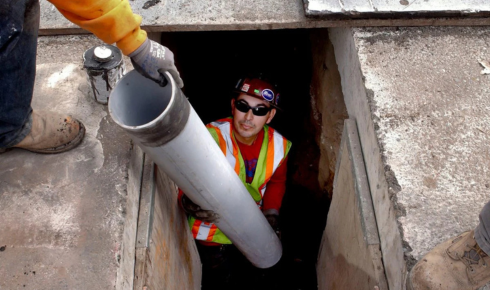
While PVC conduit protects cables and DWV pipe manages wastewater, concrete pits provide the access, organization, and maintenance points that allow underground utility systems to function efficiently throughout their operational life. Concrete pits are reinforced underground structures that house utility connections, cable junctions, valves, inspection points, drainage components, and various service equipment. Rather than burying critical infrastructure without access, engineers strategically position concrete pits to support inspection, maintenance, repairs, and future expansion.
Accessibility becomes one of their strongest assets. The use of underground utilities always means that there is a need for inspection, testing, upgrading, or repair work on them. Pits made out of concrete offer a safe way of access without unnecessary digging and save money spent on maintenance. Electrical systems usually have concrete pits wherever cables are intersected, changed, or transformed.
Concrete pits play an important role in drainage systems. Stormwater collection pits collect runoff and direct it into underground drainage networks. Inspection pits provide access for maintenance personnel to monitor water flow, identify blockages, and carry out cleaning or repair work when needed. Concrete’s structural strength makes these pits particularly suitable for high-load environments such as roads, industrial sites, airports, ports, and commercial developments. Properly designed pits withstand heavy vehicle traffic while protecting internal utility assets from external loading.
Durability contributes significantly to long-term infrastructure performance. Reinforced concrete resists environmental degradation, soil pressure, groundwater exposure, and mechanical stress over decades of service. This longevity supports sustainable infrastructure investment by minimizing replacement frequency. Integrated infrastructure planning demonstrates how these components complement one another. Consider a new commercial development. Electrical power enters the site through PVC conduit, protecting underground cables from damage.
Communication networks use separate conduit systems to maintain organized cable routing. Wastewater generated by the buildings flows through DWV pipes toward municipal sewer connections. Throughout the site, strategically located concrete pits provide maintenance access to both electrical and drainage infrastructure. Road construction provides another practical example. Underground traffic signal wiring passes through PVC conduit to protect electrical systems from moisture and mechanical damage. Roadside drainage networks utilize DWV piping to transport stormwater efficiently. Concrete pits collect runoff, provide inspection access, and connect multiple drainage branches into the primary stormwater network.
This is even more true when considering industrial facilities. Industrial manufacturing facilities frequently require extensive electrical distribution, process communication systems, fire protection systems, waste water systems, and environmental monitoring systems. Concrete pits help to house all of these facilities underground, which not only allows for the efficient performance of maintenance without disturbing production, but also helps to maintain the accessibility of the facility’s infrastructure. This helps because when a problem occurs, maintenance staff can access these underground facilities easily through these pit structures, as opposed to having to dig around an extensive area.
Also, future-proofing of the facilities infrastructure is one more issue to consider. The infrastructure does not remain constant, and as the population increases, the technology advances, and the needs change, the necessity arises to provide additional utilities and/or upgrades. In this sense, the pit structure allows future expansion in case additional utilities or upgrades become necessary, since all the utilities will be available through the pits. Another advantage of the pit design is the increase in the safety level. It comes from the appropriate separation of the electrical conduits, drainage, and maintenance chambers, which provides efficiency and helps to avoid cross-service issues.
Environmental protection is one more area where there is a chance for mutual benefits. The efficient work of the conduit systems decreases the probability of an electrical breakdown because of the intrusion of water into the system. Good drainage helps to avoid flooding and soil erosion. Accessible inspection pits allow for detecting any leakages or clogs before having a significant environmental effect. Cooperation of engineers, utility designers, contractors, surveyors, and asset management specialists is essential for any infrastructural project. Each specialist has unique knowledge and skills required for the proper work of the interrelated underground system.
Choice of material is a determining factor in the success of the project as well. The engineer will have to take into account loads, environment, soil type, water level, exposure to traffic, maintenance needs, and relevant regulations while selecting the most appropriate conduit, pipes, and pit sizes. The quality of construction work is also a crucial factor. No matter how good the material used may be, it is unlikely to make up for bad construction practices.
Regular inspections are another important way to extend the lifespan of infrastructure. Maintenance ensures that any indication of wear, build-up of sediment, damage to the cover, cabling problems, or drainage issues is detected at an early stage and before they escalate to serious problems. It has been shown that preventive maintenance always turns out to be more cost-effective compared to reactive maintenance. Digital infrastructure management plays a significant role in modern infrastructures. Using GIS, BIM, and digital utility mapping, infrastructure owners can accurately locate conduits, drainpipes, and concrete pits.
Climate adaptation has become another emerging concern. Infrastructure planning now incorporates consideration for increased rainfall, changes in the water table, temperature variation, and urban growth. Effective integration of conduit infrastructure, drainage systems, and access points for maintenance increases the resiliency of urban areas against these ever-changing challenges. Whole-life asset management involves considering not only the initial installation costs but also the long-term costs of maintenance, repairs, operation, and replacement.
Investment in highly durable underground infrastructure often results in more economical solutions even though there may be higher installation costs initially. In essence, successful underground infrastructure requires integration rather than just product selection. Power protection, drainage systems, and maintenance accessibility solve distinct needs, but they help provide reliable community services and economic growth.
In Brief
Modern infrastructure relies on far more than visible buildings, roads, and public facilities. Beneath the surface, carefully coordinated utility networks provide the essential services that keep communities functioning every day. PVC conduit safeguards electrical and communication cables from environmental and mechanical damage, ensuring dependable utility performance. DWV pipe enables efficient drainage and wastewater management, protecting both public health and structural integrity through reliable gravity-based flow. Concrete pits complete the system by providing secure access for inspection, maintenance, repairs, and future expansion.
The combination of these three elements, when done effectively during the process of planning, designing, and building, leads to the creation of underground infrastructure that is safe, durable, easier to maintain, and ready to handle the challenges of the future. All those involved in engineering, contracting, developing, and ownership of infrastructure can greatly benefit from using a coordinated approach that focuses on quality materials, proper installation, maintenance, and sustainability of their life cycle. With the continuous development of the infrastructure along with the growth of the urban population and new environmental conditions, it is important to understand how these systems function.
Related Posts